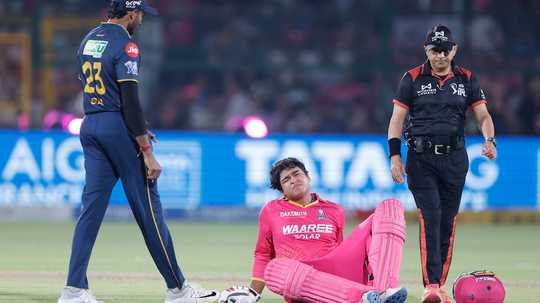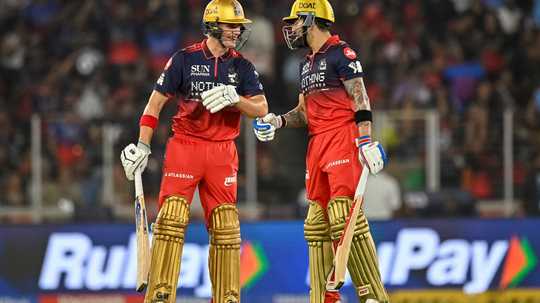
Every IPL season around the halfway mark throws up a familiar plot twist: one side from the bottom half gathers momentum and surges ahead while an early front-runner loses its grip. Rajasthan Royals have often found themselves on the wrong side of that swing. In 2014, they missed the Playoffs after being 5-2 midway through the season. In both 2015 and 2024, starts of 5-0 and 4-0 respectively still dragged them into last-game qualification scenarios.
2026 is beginning to resemble another such slide. Royals opened with four straight wins and had five victories in the first half of the campaign. Since then, they have lost three of the last four and, for the first time this season, dropped out of the top four. The downturn has largely coincided with a sharp bowling decline. Across the last four games, Royals have conceded 906 runs at 11.67 an over and managed only 16 wickets, six of them in the death overs (16-20).
The contrast with their first-half numbers is stark. Up until April 24, a day before their second half matches began, Royals were the best bowling side in the competition across every major metric: 52 wickets, an average of 21.63, strike rate of 14.8, and economy rate of 8.76. Even the three instances of conceding 200-plus came with 22 wickets in return, helping them win two of those games. Since April 25, they have slipped into the bottom half of the bowling charts, with the worst economy rate in the league. The slump culminated in them becoming the first side in IPL history to concede 220-plus in four successive matches.
@B0$
@B1$
@B2$
Personnel churn has followed the collapse. Ravi Bishnoi and Nandre Burger, who shared 19 wickets in the first half, returned 1/194 in 13.3 overs across the last four games before losing their places for the game on Saturday. Jofra Archer and Brijesh Sharma, both operating below eight runs an over earlier in the season, have gone at 11-plus in this phase while the wickets have dried up too.
The biggest regression, though, has come upfront with the new ball. Across the first seven games, Royals picked up 19 Powerplay wickets while conceding only 50 runs on average, never allowing more than 61. In the last four matches, they have managed only two wickets in the phase while leaking 77 runs on average.
@B3$
The change in home venues has not helped either. Royals won all three matches in Guwahati before moving base to Jaipur, where they are yet to win this season. Since the return of the home-away format in 2023, Royals have won only six of 18 games in Jaipur (win% 33.3) compared to five wins in eight completed matches in Guwahati (win% 62.5). Jaipur's scoring trend also tells its own story: average first-innings totals have risen from the early 160s until 2019 to 172 in 2023, 187 in 2024, 191 in 2025, and 228 so far in 2026. In comparison, the average first innings totals in Guwahati since 2023 read 172. For a side built around bowling control, those conditions have exposed the cracks quickly.
Royals still control their own fate, with two of their last three games away from Jaipur. But unless their bowling finds its first-half sharpness again, their season risks following an all-too-familiar script.