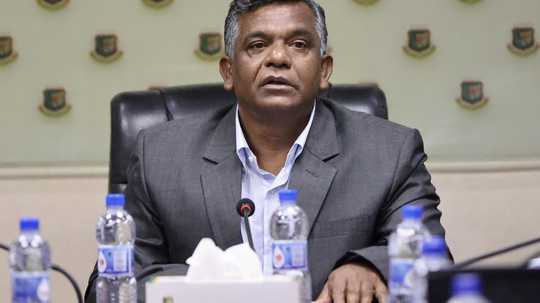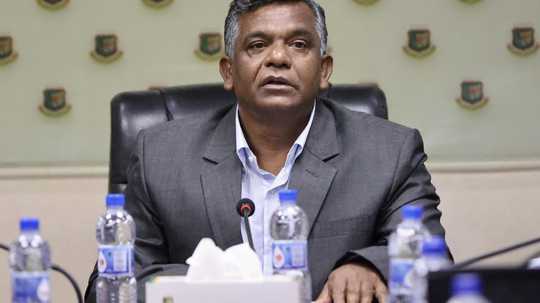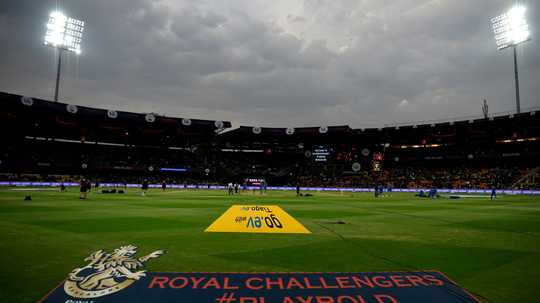
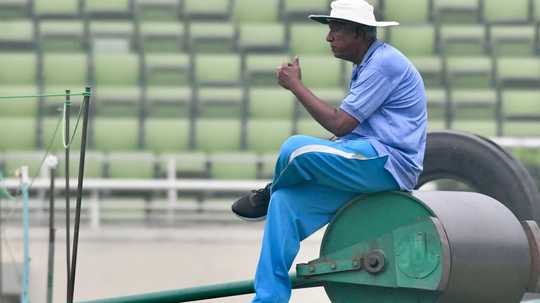
Curator Gamini de Silva is a familiar name in Bangladesh's cricket fraternity, best known for preparing the low and slow wickets at the Sher-e-Bangla National Cricket Stadium. Many believe he was one of the key architects behind Bangladesh's Test wins over England and Australia, working alongside then head coach Chandika Hathurusingha, whose plans proved too difficult for the visitors to handle. After 16 years of service, Gamini has now left Bangladesh, and before his departure he sat down with Cricbuzz to share his side of the story.
Here are the excerpts:
@B0$
Hathurusingha is a good friend of mine. We played together when we were around 14 or 15. After I retired, I started umpiring in Sri Lanka while he was still playing. Later, when I became a curator in Sri Lanka, he was coaching clubs and the Sri Lanka A team. After I came here, he came here as the Head Coach. So it was very easy to work with him because we understood each other's needs. I followed what he said because I knew he was not saying it for his own benefit. He wanted to develop cricket and the main aim was to win matches. Once we started winning, the whole world realised that Bangladesh cricket was improving. We won at home and we won abroad as well. That was the change. Working with him was very easy.
@B1$
The correct words are home board advantage. When I studied the curator course in England, the manual also clearly said that home board advantage is always there when you play cricket at home.
@B2$
I have to. As you said, it is not my personal property. The advantage should be with the home team.
@B3$
When we played and practiced, and when we worked on different scenarios, I prepared the practice pitches exactly the way the players wanted. Whatever they needed for match preparation was specifically for the match. If they wanted a practice surface with extra bounce or a grassy track, I arranged that. When they were about to tour other countries, I prepared practice wickets similar to what they would face abroad. So the practice conditions were always created according to their needs before they travelled.
@B4$
The players have contracts with the BCB. The board pays their salaries every month, and my job is to fully look after them. Whatever they asked for in terms of practice, I arranged it. But if someone is not under contract, what can I do? I cannot give them a contract myself. When a player is under contract, I am fully with them.
@B5$
The facilities are okay, but the grounds need to be developed. The number of tournaments is increasing, but the number of grounds is not.
@B6$
If you visit the academy ground on any day, you will find a team playing. One team finishes, another starts. The ground stays busy throughout the year, and the national team often uses it as well. Earlier, we had only red-ball cricket, but now there is white-ball cricket too. In the past, there was just one team. Now we have three: one each for Tests, ODIs and T20s. Earlier, the same players played all formats, but now it is divided, which means the game has expanded. Before, we needed only one pitch. Now we need three. So the only solution is to increase the number of grounds and pitches.
@B7$
Let me give you an example. Melbourne was built 148 years ago, and in all that time it has hosted only around 160 matches. In comparison, Mirpur has hosted 218 international matches in just 19 years. Can you believe that? This is the number one ground in the world in terms of international matches played in such a short period. I managed all of that. If I had said no, what would have happened? Where would Bangladesh cricket be? The ICC might have questioned whether we had enough grounds or whether we could even prepare pitches suitable for international cricket. But I did everything on behalf of the Bangladesh Cricket Board. I did not look for anything else, I just did my job. That is why I am happy. I think most people in Bangladesh will also be proud that, in such a short time, we have hosted more international matches here than anywhere else. That is how it was made possible.
@B8$
Yes. We studied this. If your pitch has no grass, it becomes only clay. If you play a match on pure clay from the very first ball, the pitch is finished immediately.
@B9$
When you play a Test match, a single pitch endures around 90 overs a day for five days. By the end of that, the surface and the grass lose all their strength and need at least two months to recover. During that period, we use the other pitches for matches while keeping some covered to protect them. That makes daily preparation extremely difficult, especially for the pitch that has just been used.
The grass roots also need to grow at least three to four inches deep to hold the clay together. If the roots are not deep enough, the surface breaks apart. It is not an easy job. As curators, we always monitor the weather forecast to decide how much water to apply. Sometimes the forecast says only a 20 percent chance of rain and then it rains the whole day, and that completely changes how the pitch behaves.
At times we plan for a pitch to start turning after three and a half days, so we keep some moisture in it for the first few days. But when the sun is too strong, the moisture disappears quickly and the ball starts turning from day two. These things are beyond our control. Sunlight and weather can completely alter our plans. No curator in the world can claim to be 100 percent successful. Anyone who says that is lying, because conditions change everywhere.
@B10$
They are happy. They come and look at the pitch and say, "Oh Gamini, this one is for me. Thank you." And then they get the results. That is why I am happy. They are performing, and they are world-class now.
@B11$
That should be the way, yes. As I have said before, the first thing we need to do is increase the number of grounds. If we have more venues, we can manage everything properly. For example, if we want to prepare a high-bounce track, we can do it here. That is not the issue. The real issue is the lack of grounds.
If Purbachal becomes fully operational, it will help a lot. Unfortunately, Fatullah went under water and we lost two venues there. Right now, almost all our domestic tournaments depend on Mirpur. During the BPL, all eight teams practise here. We have 20 to 30 matches every year, and the ground is used for nearly a month just for that tournament. On top of that, there are four-day games, the National League, international matches, high-performance camps and now women's cricket as well. We have to accommodate everyone. I cannot simply say no, because where will they play?
As a curator, you have to understand the facilities available. When I came here in 2009, I studied what facilities existed and how much cricket was being played. Over the years, the number of teams and tournaments has grown. We now have three formats, and each one requires its own preparation. All three teams often have to train at the same venue, which creates challenges. If we had more wickets and more grounds, it would be manageable. That is how other countries do it. They have enough facilities to spread the load.
@B12$
Our locally available black clay in Bangladesh contains a bit more sand. So during the hot season, it becomes very difficult to maintain the pitch without grass.
@B13$
I proposed this in 2011. All the paperwork was completed, but the government did not grant permission due to environmental and other issues. Bringing clay from outside would be a good solution. Pakistan has very good clay, and Dubai also uses Pakistan clay, which many countries import. That clay is better than what we have here. Another problem is that in Bangladesh, there is only one supplier of black clay, and sometimes he says it won't be available that year.