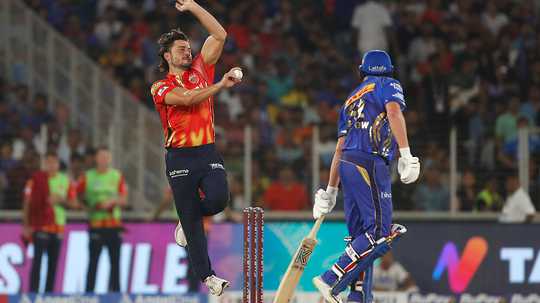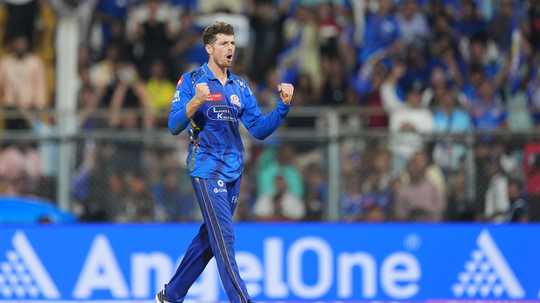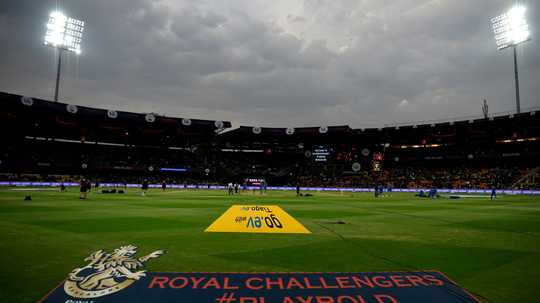

A lot of data is mined in modern T20 cricket, with substantial time spent dissecting tactics and match-ups before games, even more so in the nervous, loaded hours before the first game of a new season. And still, the most revealing moments remain stubbornly human: a player at the crease, reading the air, reading the pitch, reading something no computer has yet learned to feel.
Very early in the @L0$ at the M. Chinnaswamy Stadium, Virat Kohli turned to the dugout and made a sequence of gestures, each one flowing into the next: hit the deck, spongy tennis-ball like bounce, pull shot, top-edge.
RCB head coach Andy Flower, seated in the dugout, had been at the press conference the previous day, referencing the lessons from three home defeats last year, and offered a line: "At your home venue, you should be able to have a better understanding about the nuances of the conditions than your opposition." Without enough context, that is press conference 101 in speaking without telling much.
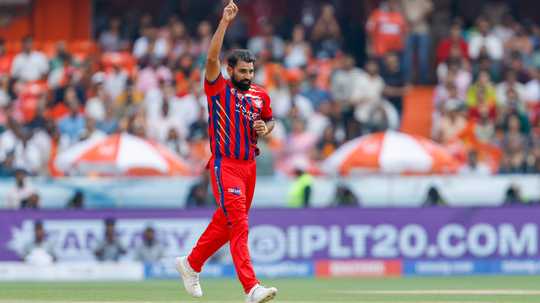
A day later, Jacob Duffy spent exactly 42 minutes on the field on his IPL debut. In that time there was enough evidence to suggest that RCB might, in fact, know their home ground a little better than their opposition, which, as IPL history would tell, is not always a given for this franchise at this particular venue.
In fairness, the understanding had been slowly accumulating through the back half of IPL 2025, through wins against Rajasthan Royals and Chennai Super Kings, the second of them managed without Josh Hazlewood. That game turned out to be a rehearsal for what was always likely to follow: the Australian's body, brilliant and unreliable in near-equal measure, would miss time again in 2026, and Duffy had been signed at the auction with precisely that possibility in mind.
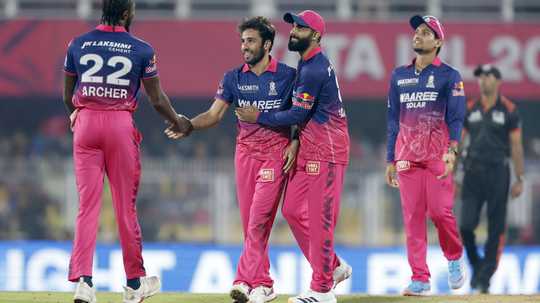
There is a clear pattern to the Duffy signing and the kind of overseas fast bowlers RCB have coveted recently - Chris Morris, Kyle Jamieson, Reece Topley, Alzarri Joseph, Hazlewood, and now Duffy - all of them tall, all of them high-armed, all of them capable of extracting bounce from angles that shorter men simply cannot replicate, of making batters feel as though the pitch itself is misbehaving.
Which is precisely what the Chinnaswamy pitch has been doing, at least in its first unsettled hours. It carries a spongy liveliness that tends to mellow over the course of an innings. Patidar had lost all three tosses in last year's home defeats, and when he won this one, he was banking on his replacement for Hazlewood - similar in stature if not yet in standing - to produce the same desired effect: a high release point creating greater variance off the pitch in the early stages, before the surface had a chance to settle into its milder self.
@B0$
As many as 12 batters last season were dismissed top edging pull or hook shots against the seamers at this ground and if you were paying close attention, nine of them came while facing bowlers running in from the Pavilion End - now rechristened the Anil Kumble end. This was the end Hazlewood had made his own. This was where Duffy began today, and once the swing dried up, his method was unhurried and precise: back of a length, cramping the left-handed pair of Abhishek Sharma and Travis Head for room to free their hands. When there was room, the pull shot is on considering the 64 metre square boundaries. But the batters didn't account for how the ball climbs off the surface.
Abhishek top-edged a pull. Head middled his but picked out long leg, and Nitish Reddy looked to work in front of square only to balloon another off the top edge. Three short balls, three wickets, and the cream of a dangerous Sunrisers Hyderabad batting lineup skimmed away before the Powerplay over was done.
Rajat Patidar would confirm in his post-match press conference that Hazlewood had spoken to the bowling group on the eve of the game. The veteran had clearly passed the copybook along. And Duffy had read it carefully enough to arrive at figures of 3 for 22 from four overs, 13 dots among them, before wrapping up his debut by 8.12 PM and returning only to receive the Player of the Match award.
It would be unfair, though, to leave some caveats unspoken. Work days haven't been this short or this productive for Duffy in India since he arrived, ranked second in the world in T20I bowling at the turn of the year, a billing that the subcontinent set about complicating with some efficiency. Across the bilateral series against India just before the World Cup, he picked up three wickets in the Powerplay at an economy of 10.30, and at the World Cup that followed, one Powerplay wicket at 11.50.
Even in his preferred zone - back of a good length to short - he bowled 29 balls in that India series for 1 for 56, and 34 balls at the World Cup for 1 for 61. Hazlewood took six of his eight wickets at the Chinnaswamy Stadium, bowling short of good length and Duffy got half that tally in the opening game and summed the turnaround in a line. "This is a different kind of wicket. I haven't seen this kind of bounce in the last couple of months."
One game is too soon for sweeping conclusions, but RCB's blueprint at home looks sound. If Duffy can carry this forward, Hazlewood's comeback - whenever it comes - need not be hurried. The copybook would seem to be in good hands.