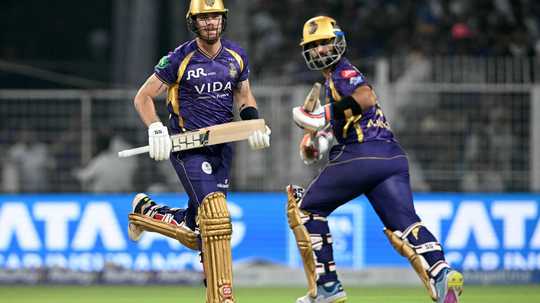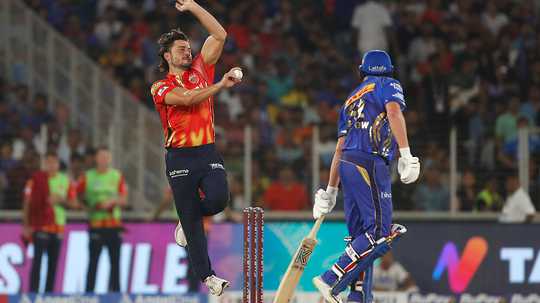
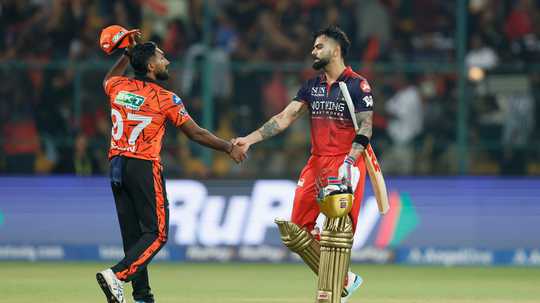
RCB finished IPL 2025 as the defending champions, while SRH finished sixth - but the divergence between the two sides ran deeper than the points table. It was just as stark in the Powerplay bowling. RCB topped the charts with a bowling average of 28.55, whereas SRH lagged behind at 42.05, sitting at the sixth position - exactly similar to where they were in the points table. When paired with an economy rate of 10.01, the picture worsens; only LSG had a poorer record than SRH with the new ball across both key metrics.
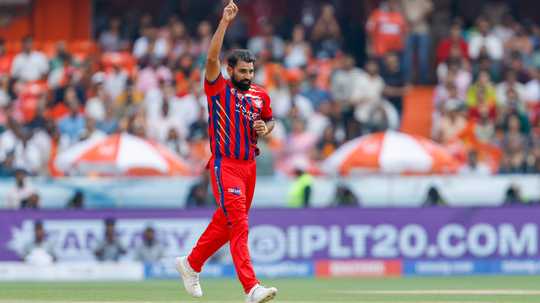
It is against this backdrop that SRH's squad decisions stand out. They released Mohammed Shami, their premier new-ball enforcer, and with a clear void to fill, their biggest auction investment went into Liam Livingstone - a move that did little to address their most pressing deficiency.
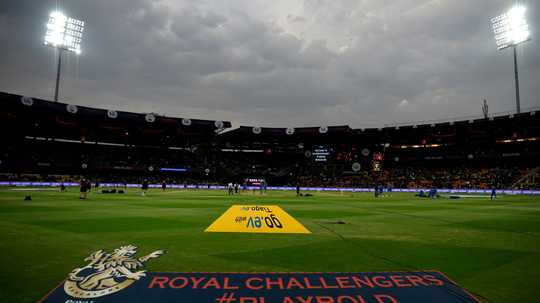
The opening game of the season laid bare these structural issues. The Chinnaswamy surface in recent IPL seasons has moved away from its run-fest reputation; hard lengths have become the most difficult to score off, @L0$. RCB, by now well attuned to their home conditions, executed this template to near perfection. Jacob Duffy offered a masterclass in hitting the deck - a method long perfected by Josh Hazlewood.
RCB seamers delivered 17 of their 36 Powerplay balls on a back-of-length or shorter, conceding just 21 runs while picking up three wickets. SRH, by contrast, bowled only eight of their 30 deliveries in that zone, conceding a mere 11 runs. However, when they hit a good length or overpitched, the remaining 22 balls were punished for 49 runs highlighting a stark inconsistency in length control.
Pace, too, proved decisive. RCB's seamers consistently operated at a higher speed range (average speed 135.4 kph to 127.2 kph by SRH), with a solitary delivery in the phase dipping below 130 kph. SRH, on the other hand, had nearly half their Powerplay deliveries, 13 out of 30, under that mark, that travelled for 35 runs. When SRH did push above 130 kph, they kept RCB down to 25 runs off 17 balls, reinforcing how that extra yard of pace had helped. Notably, Eshan Malinga, SRH's quickest option on the night, wasn't used in this phase at all.
Compounding the issue was the absence of Pat Cummins, their attack leader and leading Powerplay wicket-taker from last season. Without him, SRH's new-ball fragility became even more pronounced, especially for an attack that lacks a proven middle-overs strike bowler who could pull the game back even after a bad Powerplay.
SRH skipper Ishan Kishan reflected post-match: "I think definitely the wicket played well after the first 3-4 overs. We lost a few early wickets, and we have to take care of that." While SRH crawled to a respectable 49/3 at the end of the Powerplay, it paled in comparison to RCB's commanding 76/1 - a phase where the game was decided as SRH's vulnerabilities were ruthlessly exposed by RCB's top order.
In a tournament defined by quick turnarounds, SRH will need to recalibrate their Powerplay approach in terms of personnel and execution, without which their campaign risks being derailed before it properly gathers momentum.